
The urinalysis systems market now covers several very different workflows: compact urine chemistry strip readers, automated chemistry analyzers, and integrated systems that combine chemistry with automated microscopy. For laboratories, those categories should not be compared by one headline tests-per-hour number. The useful question is which workflow produces the required report with the least unnecessary handling at the actual sample volume.
A compact chemistry analyzer can process strips very quickly and still leave more sample loading, identification, or microscopy work to staff. An integrated platform may show a lower combined throughput because it is completing more of the urine testing workflow in one system. Buyers should compare the same reporting scope before using speed as the main purchasing shortcut.
ARI Medical offers compact and automated urine testing options in its urine analyzer category. Its urinalysis analyzer buying guide focuses on peak-hour volume, manual steps, automation, data connection, and total cost. The UA-11C Urine Analyzer and UA-772 Automated Integrated Urine Analyzer represent two different parts of the urinalysis systems market.
What Is Changing in the Urinalysis Systems Market?
For buying purposes, the market breaks into four practical groups: semi-automated urine strip readers, automated urine chemistry analyzers, urine sediment analyzers, and integrated urinalysis workstations. The first two handle chemistry at different levels of sample and strip handling. Sediment analyzers add particle examination; integrated workstations bring chemistry and microscopy into one workflow. A lab that reports chemistry alone is shopping for a different job than one that routinely reports both.
Automation Is Moving Beyond Test-Strip Reading
Laboratories increasingly need automation around the measurement itself: barcode reading, sample loading, strip management, STAT access, result transfer, and traceable records. Operator time is spent on the whole process, not only on the seconds when the analyzer reads the strip. That makes workflow automation a more useful comparison point than strip speed alone.
Integrated Chemistry and Microscopy Reduce Handoffs
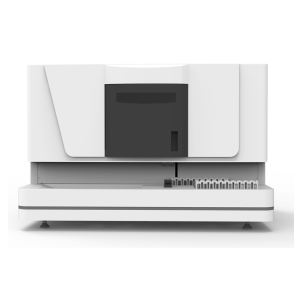
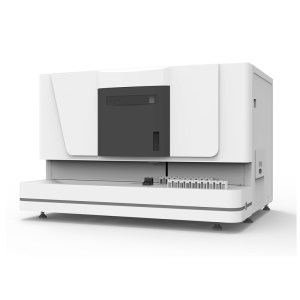
The UA-772 integrates chemistry and microscopy in one sampling workflow and supports chemistry-only, microscopy-only, or combined modes. Its microscopy uses machine-vision technology and can provide full-view and segmented images for verification. In laboratories that currently move samples between separate work areas, integration can reduce handoffs even when the combined tests-per-hour figure is lower than a chemistry-only reader.
Data Connectivity Shapes Hospital Buying Decisions
Barcode identification, bidirectional data interfaces, LIS/HIS connection, and larger result storage are important when urine testing is part of a hospital network. They can reduce repeated manual entry and support traceability. A small clinic may not need the same interface depth, so the information workflow should be defined before the analyzer is selected.
How Do Compact and Integrated Urinalysis Systems Compare?
The UA-11C and UA-772 should not be ranked by one throughput number because they perform different scopes of work. The UA-11C is a compact urine chemistry strip reader. The UA-772 combines chemistry with automated morphological microscopy and physical measurements. The comparison below keeps the work scope visible instead of treating every tests-per-hour figure as equivalent.
| Comparison Point | UA-11C | UA-772 | What It Means for the Buyer |
| Workflow scope | Urine chemistry strip reading | Chemistry + microscopy + physical measurements | Compare the same report scope, not only speed |
| Published throughput | 500 tests/hour | 240 T/H chemistry; 50-120 T/H microscopy/combined | Headline rates are not directly equivalent |
| Sample handling | Compact routine analyzer | 60 samples; 200 strips; STAT available | Automation can reduce repeated loading |
| Identification/data | RS232; 2,000 results | Barcode; bidirectional data; LIS/HIS; >=200,000 results | Hospital workflows may need stronger traceability |
| Best fit | Routine chemistry in smaller labs | Integrated urine workflow in busier labs | Choose by workflow and staff burden |
How Much Throughput Does a Laboratory Really Need?
Size the Analyzer for the Busiest Hour
Average daily volume can hide a morning surge from outpatient collections, health examinations, and ward samples. Count the samples that arrive in the busiest 60-90 minutes, then add controls, repeats, urgent samples, and review time. A system that looks adequate across an eight-hour average can still create a queue during the actual peak period.
Separate Chemistry Throughput From Integrated Throughput
The UA-11C is rated at 500 tests/hour for chemistry strip reading. The UA-772 is rated at 240 T/H for chemistry and 50-120 T/H for microscopy or combined chemistry plus microscopy. That difference does not show that the compact analyzer completes the broader urine report faster. It shows why throughput in the urinalysis systems market must be matched to the measurement scope.
Check Sample Volume and Loading Capacity
The UA-772 uses native samples, requires a minimum sample volume of 5 mL, accepts up to 60 loaded samples, and holds 200 strips. These points should be checked against collection tubes, minimum-volume policies, peak batch size, repeat testing, and the laboratory SOP before purchase.
Which Data, Verification, and Cost Factors Matter Most?
Barcode and LIS/HIS Connection
The UA-772 includes a built-in barcode reader, bidirectional data interface, and LIS/HIS connection. These functions can reduce manual identification and transcription when they are correctly integrated with the hospital network. Confirm the interface scope, local IT responsibilities, and acceptance testing before installation.
Result Storage and Image Verification
The UA-11C stores 2,000 results locally. The UA-772 stores at least 200,000 results and provides reports with images and diagrams. Its microscopy workflow supports full-view and segmented images for verification. Larger storage and image review are useful when the laboratory needs traceability or longer retention, but they should match the actual record policy.
Calculate Cost per Reportable Result
Put each quote on the same time period. Annual ownership cost can include the purchase price and installation spread over the planned service life, plus strips, controls, cleaning materials, sample containers, staff time, interface fees, maintenance, repeat tests, and expected downtime. Divide that annual total by the number of reportable patient results, not the number of strips read. A cheaper machine may cost more per result when labor and repeats stay high. An integrated system may also be hard to justify if the lab rarely orders microscopy. Use your own volumes and local service costs rather than a vendor’s peak throughput to make this comparison.
Do Not Pay for Automation You Will Not Use
Laboratories with lower sample volumes and chemistry-only workflows may be better served by a compact analyzer with local printing and basic data connection. Where larger batches, urgent samples, microscopy review, and networked results are routine, integrated automation may remove more manual work. The useful market segment is defined by workflow burden, not by the most advanced model name.
How Should Buyers Shortlist a Urinalysis System?
Match the Platform to the Required Report
Choose the UA-11C when the main requirement is compact routine urine chemistry with 11 test items, 500 tests/hour strip-reading throughput, built-in printing, RS232 connection, and 2,000-result storage. Consider an integrated platform such as the UA-772 when the laboratory needs chemistry plus automated microscopy, 60-sample loading, a 200-strip tank, STAT access, barcode identification, bidirectional data, LIS/HIS connection, image-supported verification, and much larger result storage.
Prepare the Project Data Before Requesting a Quote
Prepare peak-hour sample volume, chemistry and microscopy requirements, strip configuration, minimum sample volume, STAT needs, LIS/HIS interface details, retention policy, local voltage, training needs, and target delivery date. Then contact ARI for the model-specific configuration instead of comparing only the headline throughput.
Conclusion
The urinalysis systems market is best compared through laboratory workflow. Compact chemistry readers, automated urine chemistry analyzers, and integrated chemistry-plus-microscopy systems solve different problems. Compare peak-hour demand, measurement scope, sample loading, automation, barcode use, LIS/HIS connection, result storage, verification, staff time, and cost per reportable result. A higher tests-per-hour number is useful only when it describes the same work the laboratory needs to complete.
FAQ
What Is Driving the Urinalysis Systems Market?
The main workflow drivers are higher sample volumes, more automation, less manual identification and result entry, stronger LIS/HIS connectivity, and integrated chemistry and microscopy in laboratories that need both.
Is a 500 Tests/Hour Urine Analyzer Always Faster Than an Integrated System?
No. Chemistry strip-reader throughput and chemistry-plus-microscopy throughput measure different work. Compare the complete report scope, sample handling, repeats, review, and data transfer before comparing speed.
When Should a Lab Choose an Integrated Urine Analyzer?
Consider an integrated system when the laboratory routinely needs both chemistry and microscopy, larger sample loading, STAT access, barcode identification, networked data, image verification, and less manual sample movement.
Why Does LIS/HIS Connection Matter?
It can reduce manual result transcription and support traceability when the analyzer is correctly integrated with the laboratory or hospital information workflow.
What Should Be Included in Urinalysis System Cost?
Include equipment, strips, controls, cleaning materials, repeats, staff time, software or interface work, installation, training, maintenance, storage requirements, and downtime, not only the purchase price.