
This market is served by single-channel, two-channel as well as higher-parallel-capacity coagulation systems. Depending on their detection principle, degree of automation, test menu, pre-analytics, reagents management as well as data management the analyzers differ from each other.
In compact clinical laboratories the number of channels first has to be defined. The daily number of tests is less important than the number of tests in the busiest hour.
Test menu, temperature control, repeatability, consumption of reagents, location of test preparation, data management and service functionality.
A coagulation analyser should cover your required tests, such as PT, APTT, TT, and FIB, without leaving samples waiting or adding capacity you rarely use.
Choosing a coagulation analyzer involves a number of factors including the quality control needed to run the analyzer and the costs of running the tests. ARI Medical offer the AR-5002 Coagulation Analyzer a compact two channel coagulation analyzer for the laboratory.
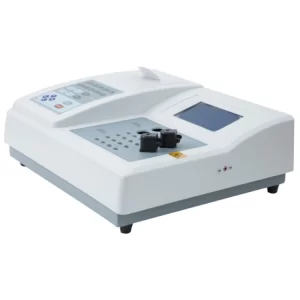
What Are the Main Types of Coagulation Analyzers?
For purchasing purposes, testing capacity gives buyers three useful groups. These describe how much work an analyzer can handle, rather than its detection method.
Single-Channel Coagulation Analyzers
A single-channel coagulation analyzer is usually a testtube analyzer which runs one test at a time.
A low volume of samples are received on a regular basis by small clinics and laboratories and there is little need for parallel testing.
The simple workflow is suitable for regular testing. Although samples can be sent in batches, this can still result in a queue.
Single-channel systems are generally suitable when:
- Daily coagulation testing volume is low.
- One parameter is usually tested at a time.
- Urgent samples are uncommon.
- Parallel testing is not required every day.
Two-Channel Coagulation Analyzers
A 2-channel coagulation analyzer enables two analyses to be processed at the same time. When purchasing a 2-channel analyzer, it is essential to check the model in question for the analyzes to be run on the two channels.
This leaves space for growing clinics and small hospital laboratories to handle overlapping tests.
The AR-5002 can run up to two different parameter tests at the same time. Sample and reagent can be pre-warmed, results can be stored locally, printed out, and the AR-5002 has an open reagent system.
Two channels become useful in situations like peak-hour queues, multiple parameters requested at the same time and by different users, and by nature of urgent samples interrupting routine testing.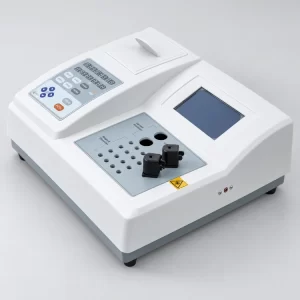
Higher-Parallel-Capacity Coagulation Systems
Higher-parallel-capacity coagulation systems serve laboratories with heavier workloads.
These models can offer more simultaneous tests, more preparation positions and extended QC and data management functions depending on the model chosen.
Having more channels does not automatically mean fully automated control.
Consider higher throughput automated systems when processing large numbers of samples on a daily basis, dealing with frequent STAT samples or samples that significantly delay testing when using manual pipetting. Verify the automated system’s QC and LIS connectivity separately.
Single-Channel vs Two-Channel vs Higher-Capacity Systems
| Analyzer Type | Best Fit | Main Advantage | Main Limitation |
| Single-channel | Low-volume clinic or laboratory | Simple routine testing | Queues when several tests arrive together |
| Two-channel | Growing clinic or small hospital lab | Two tests can run in parallel | May be insufficient for sustained high-volume work |
| Higher-capacity system | Busier hospital or laboratory | More simultaneous testing capacity | Higher cost if capacity is underused |
Channel count does not determine throughput. Throughput is affected by many factors including time per assay, number of steps performed by operator, number of repeats, number of controls and sample preparation.
Before choosing, record the following information for the busiest hour of the day: the number of samples needed for routine coag tests, the number of STAT coag tests needed, and the number of coag tests that are typically ordered as a group.
How Else Can Coagulation Analyzers Be Classified?
Another factor to consider is capacity. Detection methods and amount of manual work are also important to consider when determining which tests to execute and how to execute them.
By Detection Principle
For clot-based tests, mechanical or viscosity-based clot detection follows physical changes as the clot forms. Optical or photoelectric clot detection measures changes in light transmission or scattering.
Chromogenic assays are determined by changes in color of the assay solution. Immunoturbidimetric assays are determined by changes in turbidity of antigen-antibody complexes. Multi-method coagulation systems are designed to run many different types of assays and therefore are not classified as five separate types of analyzers.
Scattered light detection is used in the AR-5002. The fact that this analyzer has two channels does not mean that it can be used for chromogenic or immunoturbidimetric assays.
By Automation Level
Typically, semi-automated laboratory analyzers are not programmed to add samples and reagents for the operator. In contrast, fully automated systems can add a number of steps to the processes above.
Identify the remaining manual tasks and quantify the staff time associated with each.
By Test Menu
The analyzer should support the tests which your laboratory really performs.
Routine tests for coagulation often include PT, APTT, TT and FIB. Also clotting factor tests and other assays have to be confirmed with the intended reagents.
Also, please check the reporting units and the related QC procedures. The AR-5002 test analyzer delivers test results in seconds, as a percentage value, as PTR/INR value and in g/L, depending on the specific test performed.
By Sample and Reagent Workflow
Testing channels form only a small part of a complete workflow.
The AR-5002 has 16 sample pre-warming positions and 3 reagent pre-warming positions. These are preparation positions and not additional measurement channels.
Compare the pre-warming capacity of your laboratory thawer with the way your samples arrive during busy periods.
What Performance Factors Should You Compare?
Once you have covered the aspects of capacity and test menu, you can move on to the daily testing relevant specifications.
Temperature Stability and Repeatability
Coagulation reactions are temperature-sensitive.
The compact AR-5000 series is extended by the AR-5002 with temperature control at 37 ± 0.3°C and with a repeatability of CV < 2%.
Even though most of the relevant errors stem from correct pipetting, storage of reagents, calibration, controls and operator procedures, it would be helpful to get to know the conditions of the repeatability test. Use the laboratory’s QC procedures when setting up the test.
Reagent and Sample Consumption
The use of reagents for daily testing can become very expensive.
Sample consumption is 20-40 μL and reagent consumption is 20-40 μL for the open reagent system of the AR-5002. Check the required volumes for your assays and test for compatible reagents.
Calculate the annual cost of your patient tests plus controls, calibration, repeats and waste rather than just multiplying the number of tests you take on patients.
Result Storage and Data Management
Determine how results from the analyzer will be entered into the laboratory information system record.
This model AR-5002 has a memory for up to 10,000 results, an internal thermal printer and a connection to the computer by means of RS232.
Just because something says RS232 on it does not mean it is ready to connect to your LIS. Verify the software, interfaces and any additional cost the vendor may charge to integrate with your system.
Which Type of Coagulation Analyzer Fits Your Laboratory?
A low-volume clinic will likely be able to function well with only one channel, since they rarely run more than one type of test at a time.
A growing diagnostic laboratory may need two channels, as their queues start to become regular.
A very busy hospital laboratory may want more capacity on days when delays continue to occur throughout the day rather than on very busy days.
The AR-5002 is best suited for a laboratory that performs two-channel testing on a regular basis and also runs routine PT, APTT, TT, and FIB testing. It has a pre-warming feature, local result storage, and a built-in printer. Compare this to your actual workload.
What Changes the Long-Term Cost of a Coagulation Analyzer?
Purchase price is only part of the bill.
Reagents, controls, calibration, consumables, staff time, maintenance, training, spare parts and down time.
Establish who will be responsible for installation, training and repairs before you place your order.
Please review the ARI services offered in your quote. We would like to confirm the warranty offered, the scope of spare parts offered, the terms and conditions of the service, and the equipment configuration quoted.
How Do You Choose the Right Coagulation Analyzer?
Start with workload rather than the equipment catalogue.
Before requesting a quotation, prepare:
- Routine daily sample volume
- Peak-hour sample volume
- Routine coagulation test menu
- Frequency of urgent samples
- Number of parameters commonly ordered together
- Preferred reagents
- QC requirements
- Reporting and data needs
- Local voltage
- Training and service requirements
The information provides a means of determining whether a single channel, two channels or even larger system would be best suited for the laboratory.
Please send this list of required changes with your initial contact to ARI so that the necessary work can be shown in the config and quote.
Conclusion
Consider your routine workload and peak periods when choosing the capacity you need. All aspects of detection methods, assay support and operator time should receive the same amount of consideration as the number of channels.
The AR-5002 might be of interest when two parallel tests need to run at high workload. If preparation steps or sustained queues are still an issue, consider a more automated or higher-capacity system before you place your order.
FAQ
What Are the Different Types of Coagulation Analyzers Available on the Market?
By capacity, buyers can compare single-channel, two-channel, and higher-parallel-capacity systems. They also differ by detection method and automation level. Some combine clot-based, chromogenic, and immunoturbidimetric testing on one platform.
What Is the Difference Between a Single-Channel and Two-Channel Coagulation Analyzer?
Typically a single channel analyzer runs one test at a time, whereas a two channel analyzer runs two tests at the same time. The AR-5002 also runs two parameter analyses at the same time. Check this possibility for other models as well.
Which Coagulation Analyzer Is Suitable for a Small Laboratory?
A single channel may be sufficient for low volume analysis with rare sample overlap. However, for samples containing several parameters or requiring urgent analysis, two channels can help to manage the increased workload, and aid assessment of peak time sample preparation manual time.
What Tests Should a Coagulation Analyzer Support?
Basic routine tests are PT, APTT, TT and FIB. Check for any other required tests, suitable reagents, test results, and QC required for the selected assay.
What Should Be Compared Before Buying a Coagulation Analyzer?
Channels, Detection, Test Menu, Peak Workload, Prep Capacity, Temp Control, Repetability, Reagent Use, QC, Result Storage, Connectivity, Service and Total Operating Cost.