
A multiparameter patient monitor should be selected by care area, not by a long feature list. ICU, ward, operating room, recovery, and transport workflows need different parameter sets, screen sizes, alarm behavior, battery expectations, accessories, and data review functions.
This guide focuses on bedside and mobile multiparameter patient monitors rather than central stations or remote monitoring platforms. That keeps the purchase decision tied to parameters, screen size, battery, accessories, alarms, and care-area workflow.
ARI Medical‘s ARI-800D/800D+ Modular Patient Monitor and L-series monitors provide useful reference points for comparing standard ward monitoring with more expandable ICU configurations. Their parameter sets, screen choices, battery, accessories, and service support can be matched to bedside, ward, ICU, and transport requirements.
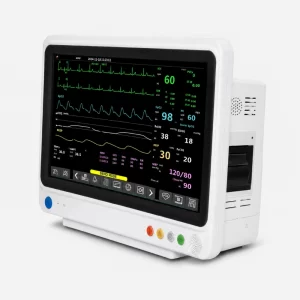
What Is a Multiparameter Patient Monitor?
Selection begins with the measurements the care protocol requires, followed by the accessories, alarms, documentation, and review tools needed to use those measurements consistently.
How Does a Multiparameter Patient Monitor Combine Core Vital Signs?
A multiparameter patient monitor combines measurements such as ECG, heart rate, SpO₂, pulse rate, NIBP, respiration, and temperature on one display.
How Should Patient Monitor Parameters Match Clinical Care Protocols?
Specify parameters according to the department’s monitoring protocol, then confirm that accessories, alarms, documentation, and data review functions support that choice.
The ARI-800D/800D+ Modular Patient Monitor is listed by ARI Medical with 12.1-inch and 15.6-inch screen choices, standard ECG, RESP, SpO₂, TEMP, NIBP, and PR/HR parameters, and optional IBP, EtCO₂, CO (cardiac output), and CMS functions. It also lists a 5200mAh battery with a stated four-hour operating time.
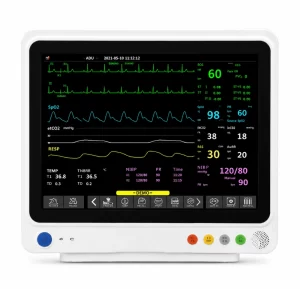
Patient Monitor Parameters by Care Area
The table organizes the starting specification by care area, then leaves room for model-specific modules, accessories, and protocol confirmation.
| Care Area | Core Parameters | Common Options and Accessories | Main Buying Concern |
|---|---|---|---|
| General ward | ECG, SpO₂, NIBP, RESP, TEMP, PR/HR | Recorder, trolley, wall mount | Ease of use and standard accessories |
| ICU | ECG, SpO₂, NIBP, RESP, TEMP, PR/HR | IBP, EtCO₂, CO where supported, expanded trend and alarm review | Expansion, alarm review, trend data |
| Operating room | ECG, SpO₂, NIBP, RESP, TEMP, PR/HR | IBP, EtCO₂, recorder, or other procedure-specific modules supported by the selected model | Procedure workflow and visibility |
| Transport | ECG, SpO₂, NIBP | EtCO₂ where required, extended battery options, and secure transport mounting | Battery, weight, durability |
Which Core Patient Monitor Parameters Should Hospitals Specify First?
For many care areas, ECG, respiration, SpO₂, temperature, NIBP, pulse rate, and heart rate form the starting specification. Confirm the department’s actual protocol.
What Parameters Should a Patient Monitor Include for Different Care Areas?
General wards usually need the core set and an interface that nurses can operate quickly. ICU and operating room monitors may need IBP, EtCO₂, more waveforms, longer data review, and clearer alarm management. Transport monitors need enough battery duration, secure mounting, and accessories that can move safely with the patient. These patient monitor parameters should be tied to the care protocol rather than added as a generic feature list.
Do not add optional parameters without a protocol. IBP requires pressure transducer workflow and training. EtCO₂ is valuable when ventilation or airway-related monitoring is required, but it also adds sensors, consumables, maintenance, and user training. Each option should be tied to a care use case.
ICU vs Ward Patient Monitor: What Is the Difference?
Ward monitors prioritize standard measurements, ease of use, stable accessories, and fast routine checks. ICU monitors often need more waveforms, expansion options, advanced alarm review, invasive monitoring, and connection to broader monitoring workflows. The difference is not only screen size; it is the level of physiologic monitoring, alarm response, and data review required by the care area. This ICU vs ward patient monitor decision should be based on the department’s actual protocol.
What Should Hospitals Prioritize When Choosing a Ward Patient Monitor?
Ward purchases usually prioritize reliable core measurements, straightforward operation, stable accessories, and fast routine checks across multiple beds.
What Additional Functions Should an ICU Patient Monitor Provide?
ICU teams may need additional waveforms, optional modules, deeper trend review, and integration with a central monitoring workflow.
The ARI-L10/L12/L15 Advanced Patient Monitor family offers 10-inch, 12-inch, and 15-inch display options. Its official specifications include standard ECG, SpO₂, temperature, NIBP, respiration, pulse rate, and heart rate measurements, with optional IBP and EtCO₂. The page also lists trend, event, NIBP, and resting 12-lead ECG result storage.
For hospitals comparing the two product families, the L series is a useful starting point when core parameters, screen choice, and optional IBP or EtCO₂ meet ward or transfer needs. The ARI-800D/800D+ is the stronger comparison when the project requires CO or CMS in addition to optional IBP and EtCO₂. The final model should be confirmed against the care protocol, accessory list, mounting requirements, and expected battery load.
What Should a Transport Patient Monitor Prioritize?
Transport turns a bedside monitor into a moving system. The specification should cover the power transition from bedside AC power to battery operation and then to destination AC power, while keeping essential patient monitor parameters visible throughout the move.
How Much Battery Runtime Does a Transport Patient Monitor Need?
Do not judge battery performance by rated capacity alone. Check actual operating time with the planned screen brightness, connected parameters, alarm behavior, accessories, and battery age. The ARI-800D/800D+ page lists a 5200mAh battery and a stated four-hour operating time, but the transport plan should verify runtime under the intended load.
What Mounting Features Matter for Safe Patient Monitor Transport?
Confirm compatibility with the trolley, bed rail, ambulance or transfer cart, and any secure mounting point used on the route. The monitor must remain stable while staff turn corners, pass thresholds, and move between departments. Weight, handle position, cable length, and access to controls affect safe movement.
How Should Sensors, Cables, and Power Be Managed During Patient Transport?
ECG, SpO₂, NIBP, and other required accessories must move with the patient. Cable management matters more during transport than in a fixed bedside setting because loose leads can disconnect, snag, or delay handover. Confirm charging, battery replacement, alarm continuity, patient identification, and the complete bedside AC power -> battery operation -> destination AC power sequence before approval.
Total Cost, Training, and Service Support
A monitor quotation should separate equipment cost from the supplier handover responsibilities required to put the system into service.
What Costs Should Hospitals Include Beyond the Patient Monitor Price?
The total cost of a patient monitor includes the device, sensors, cables, cuffs, batteries, modules, mounting hardware, trolleys, recorder paper, network items, installation, training, preventive maintenance, calibration or performance verification, spare parts, and downtime. Calculate cost per equipped bed or care position, not only price per monitor.
What Should Hospitals Confirm During Patient Monitor Installation and Handover?
Before purchase, agree who installs, trains staff, checks alarm setup, records serial numbers, and handles faults during the first weeks of use.
ARI Medical operates three manufacturing facilities in Anhui, Jiangsu, and Guangdong, with more than 50,000 square meters of factory area. Its factories follow ISO 9001 and ISO 13485 quality systems. ARI Medical also provides hospital solutions and service support for equipment planning, installation, training, and long-term use. When requesting a quotation, provide the contact team with your care areas, quantities, required parameters, mounts, accessories, data requirements, and rollout schedule.
Conclusion
Choose a multiparameter patient monitor by care area first. General wards need dependable core parameters and simple operation. ICU and operating room settings may need optional parameters, stronger alarms, larger displays, and deeper data review. Transport use needs battery, weight, mounting, and durability. A complete specification should list parameters, accessories, screen size, battery, data needs, training, and service before quotation.
FAQ
Which Patient Monitor Parameters Are Required for ICU and Ward Use?
A standard monitor commonly includes ECG, heart rate, SpO₂, pulse rate, NIBP, respiration, and temperature. ICU protocols may additionally require IBP, EtCO₂, CO (cardiac output), expanded trends, or other supported options.
What Is a Multiparameter Patient Monitor?
It is a monitor that displays several patient measurements on one device, such as ECG, SpO₂, NIBP, respiration, and temperature.
What Is IBP in a Patient Monitor?
IBP means invasive blood pressure, an optional parameter used in care settings whose protocols require invasive pressure monitoring.
What Is EtCO₂ Monitoring Used for?
EtCO₂ monitoring tracks exhaled carbon dioxide trends and supports ventilation and airway monitoring during care or procedures where capnography is required.
What Screen Size Is Best for a Patient Monitor?
The best size depends on viewing distance, waveform count, mounting location, transport needs, and the care area’s alarm response workflow.