
A 48-well real-time PCR machine and a 96-well thermal cycler can both be used for high-throughput PCR. They differ in terms of capacity and detection method. The 48-well machine can perform fluorescence detection during amplification, whereas the 96-well thermal cycler is intended for conventional amplification in gradient temperature programs. However, usable throughput is also influenced by a number of external parameters, for example by the type of control wells, repeat wells, by run time, by sample preparation, by data review, by available space on the bench, by the number of staff available, and by the possibility of recovery from failed runs.
Laboratories usually need to compare usable sample capacity, detection method, batch size, bench space, and cost per valid result rather than well count alone. This is especially important when a compact real-time PCR system and a larger thermal cycler are both on the shortlist.
ARI Medical’s AR-48E/48R Real-Time PCR System and AR-96T PCR Thermal Cycler provide a practical comparison between compact real-time detection and larger conventional gradient cycling. Their optical channels, gradient capability, storage, run recovery, dimensions, and workflow requirements make the choice between real-time PCR and conventional thermal cycling more useful than a well-count comparison alone.
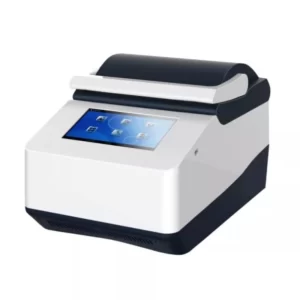
48-Well Real-Time PCR vs 96-Well Thermal Cycler Comparison Table
For buyers making a PCR instrument comparison, the table compares the two instruments by capacity, detection, workflow, cost drivers, and likely laboratory fit rather than treating well count as the only difference.
Do Not Treat Both Instruments as Equivalent
The two instruments should not be compared by well count alone because one includes real-time fluorescence detection while the other focuses on conventional amplification.
Compare the Assay Path
Map extraction, controls, amplification, detection, reporting, and repeat handling before deciding that the larger well count is automatically better.
| Factor | 48-Well Real-Time PCR | 96-Well Thermal Cycler |
|---|---|---|
| Typical capacity | 48 positions before controls and repeats | 96 positions before controls and repeats |
| Detection type | Fluorescence detection during amplification | Amplification without real-time fluorescence detection |
| Best fit | Small and medium labs, mobile labs, routine qPCR | Larger batches and conventional PCR setup |
| Workflow focus | Channels, data files, reporting, Ct analysis | Gradient optimization, templates, batch cycling |
| Cost driver | Channels, software, assays, data workflow | Batch size, consumables, run planning |
| ARI Medical example | AR-48E/48R | AR-96T |
How Many Samples Can a 48-Well or 96-Well PCR Machine Process?
A 48-well PCR machine does not necessarily process 48 samples per run, and a 96-well machine does not always process 96. Controls, standards, repeats, and reserved wells reduce usable sample capacity. A realistic calculation is: usable samples per run = total wells minus controls, calibration wells, repeat wells, and failed or reserved wells. If a 48-well run uses 4 controls and 4 repeat positions, the usable sample count is 40. If a 96-well run uses 8 controls and 8 repeat positions, the usable sample count is 80. These figures are illustrative only. Actual controls, standards, duplicates, reserved wells, and repeat positions depend on the assay protocol.
Start With Usable Wells
Controls, standards, duplicates, and repeat wells reduce the number of patient samples that can enter a nominally full plate.
Daily Usable PCR Throughput = Usable Samples per Run × Completed Runs per Day. Completed runs should include preparation, loading, amplification, detection, result review, cleaning, and changeover time. A smaller machine used in full batches can sometimes have a better cost profile than a larger machine with many idle positions, so PCR machine throughput should be modeled with the laboratory’s actual working day.
For example, if a laboratory typically needs about 30 usable results in a qPCR batch, a partly filled 96-well plate may provide little practical advantage when the assay still requires real-time fluorescence detection. In that workflow, a 48-well real-time PCR machine may be the better fit. If conventional PCR batches regularly approach 80 usable wells and downstream detection is already established, a 96-well PCR thermal cycler may use the available capacity more effectively. This is an illustrative purchasing scenario; actual capacity depends on the assay protocol.
Real-Time PCR System vs Conventional Thermal Cycler: Which Does Your Lab Need?
Choose a real-time PCR system when the laboratory needs Ct values, amplification curves, melting curves, genotyping, relative quantification, or fluorescence-based reporting. Choose a conventional thermal cycler when the main need is conventional PCR amplification, gradient optimization, and larger routine batch setup without real-time detection. This choice between real-time PCR and conventional thermal cycling should come before comparing the number of wells.
When Should a Lab Choose a 48-Well Real-Time PCR System?
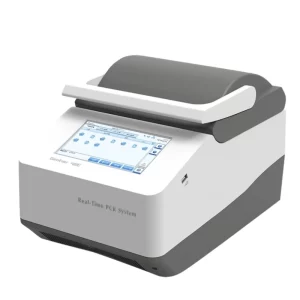
A 48-well real-time PCR system is useful when the laboratory needs fluorescence detection, Ct values, amplification curves, melting curves, genotyping, or routine quantitative PCR (qPCR) workflows in modest batches. The AR-48E/48R Real-Time PCR System uses a 48-well format. AR-48E provides four fluorescence channels, while AR-48R provides two channels.
When Real-Time Detection Is Needed
Choose a real-time platform when the assay requires fluorescence monitoring and quantitative or qualitative results during the amplification process.
ARI Medical lists a 7-inch touchscreen for stand-alone operation, storage for more than 1,000 experimental data files, USB import and export, fluorescence scanning within two seconds for 48 wells, and automatic experiment recovery after a power interruption. Those details are important for small and medium labs that cannot rely on a separate computer for every run.
How Do Fluorescence Channels Affect Real-Time PCR Selection?
Fluorescence channels matter only when the assays use them. A two-channel real-time system can fit simpler detection needs. A four-channel system can support broader dye combinations and multiplex work if the laboratory’s assays require them. Buyers should list current and planned assays, fluorophores, controls, reporting needs, and software analysis modes before paying for extra channels.
When Should a Lab Choose a 96-Well Thermal Cycler?
A 96-well PCR thermal cycler is suitable when the workflow needs larger conventional PCR batches, repeated protocol setup, or gradient optimization rather than real-time fluorescence detection. The AR-96T PCR Thermal Cycler supports 96-well plates and up to 12 gradients in one run, which helps teams optimize annealing conditions across a batch.
When Temperature Cycling Is the Task
A 96-well thermal cycler is appropriate for PCR preparation workflows where downstream detection is performed separately.
Its official page lists a 7-inch touchscreen, more than 1,000 stored programs, preloaded experiment templates, USB storage, automatic recovery after a power failure, and front and rear air ducts so multiple units can be placed closely in parallel. That matters when a laboratory plans several instruments in one room.
What Matters Most in a Conventional Thermal Cycler?
For conventional PCR, fluorescence channels are not the main issue. Temperature uniformity, gradient range, heated lid behavior, program storage, supported consumables, and run recovery are more relevant. This is why the laboratory should decide between real-time PCR and conventional thermal cycling before comparing well count alone.
How Much Bench Space Does a PCR Machine Need?
ARI Medical lists both PCR models at 260 by 400 by 260 mm and 11 kg. Bench space is a measurable part of PCR workflow. Check ventilation clearance, power supply, operator access, plate loading space, nearby extraction workflow, and whether multiple instruments can be placed together without blocking air ducts or service access. Review ARI Medical’s company profile, laboratory solutions, and service resources when planning installation, training, and long-term support.
Count the Supporting Equipment
Bench planning includes extraction tools, pipettes, cold storage, a computer, consumables, and space for clean and post-amplification work, not only the instrument footprint.
Price a Valid Result
Include controls, reagents, consumables, repeat rates, labor, maintenance, and downtime when comparing cost per result.
Cost per sample should be calculated from usable wells, not total wells. Add consumables, controls, repeats, operator time, verification, installation, training, preventive maintenance, software or data handling, and downtime. Power-failure recovery can protect time and reagents, so recovery behavior should be part of the cost discussion. Also compare the smallest practical batch, because a partly loaded 96-well run may cost more per valid sample than a full 48-well run.
Conclusion
When comparing a real-time PCR system with a conventional thermal cycler, choose a 48-well real-time PCR machine when fluorescence detection and compact routine workflow are the priority. Choose a 96-well conventional thermal cycler when larger conventional batches and gradient optimization are more important. Build the purchase around usable samples, assay needs, channels, bench space, daily PCR machine throughput, and cost per run, then contact ARI Medical with your batch sizes and protocol requirements.
FAQ
What is the main difference between 48-well and 96-well PCR machines?
In this comparison, the 48-well model provides real-time fluorescence detection, while the 96-well model is a conventional gradient thermal cycler designed for larger amplification batches without real-time fluorescence measurement.
How do I calculate usable PCR samples per run?
Subtract controls, calibration wells, repeat wells, and reserved positions from the total well count.
Is real-time PCR the same as a thermal cycler?
A real-time PCR instrument is a thermal cycler equipped with optical fluorescence detection. A conventional thermal cycler controls amplification temperatures without monitoring fluorescence in real time.
How many fluorescence channels does a PCR machine need?
The right number depends on the assay dyes, multiplex plans, reporting needs, and whether future tests require more channels.
What happens if power fails during a PCR run?
Some systems offer automatic experiment recovery after power interruption, but buyers should verify the exact recovery behavior for the chosen model.
Which PCR machine should I buy for my laboratory?
Choose a real-time PCR machine when the workflow needs fluorescence detection, Ct values, amplification curves, melting curves, genotyping, or quantitative PCR. For quantitative workflows, this is the qPCR machine category. Choose a 96-well PCR thermal cycler when the main need is conventional amplification, gradient optimization, and larger batches without real-time fluorescence detection. Then compare usable samples per run, batch size, bench space, and cost per valid result.