
When selecting a urinalysis analyzer in 2026, there are four key points to consider: peak-hour sample processing volume, the amount of manual sample handling, test menu requirements, and the full cost of producing a reportable result.
Do not be misled by the throughput number alone. A fast urinalysis machine is of little value if staff must continually load test strips, enter sample IDs manually, move samples to another testing area, or transfer results into the laboratory information system by hand.
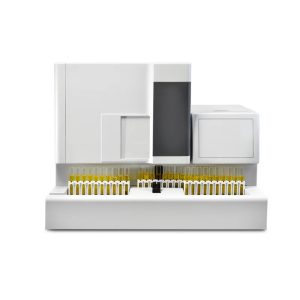
For a medium- or high-volume urine chemistry workflow, the UA-752 Automatic Urine Analyzer is worth placing on your shortlist. This automatic urine strip analyzer combines throughput of up to 240 tests per hour with automated sample handling, barcode reading, STAT access, quality-control functions, and LIS/HIS connectivity.
What Should You Define Before Comparing Urinalysis Analyzers?
Before comparing specifications, write down how urine samples move through your laboratory today. The answer often shows whether you need a basic strip reader, a semi-automatic urine chemistry analyzer, or a more automated system.
Daily Volume and Peak-Hour Demand
Average daily volume helps, but the busiest hour matters more. Outpatient collections, health checks, and morning ward samples can arrive together. A laboratory that processes 150 samples across a full day may still face a queue of 50 samples within one short period.
Count routine samples, repeat tests, controls, and urgent requests. Leave room for growth. A clinical laboratory analyzer that already runs near its practical limit can cause delays sooner than expected.
Current Manual Steps
List each manual action: checking tube labels, entering patient IDs, dipping strips, transferring results, and moving urgent samples ahead of routine work. These steps take time and create points where identification or transcription errors can occur.
Automation should remove repeated handling. It should not simply add a larger screen or a longer specification list.
How Much Throughput Does Your Laboratory Really Need?
Rated throughput shows the highest testing speed achieved under specified conditions. Real workflow capacity also depends on sample loading, strip supply, sample preparation, quality-control runs, repeat testing, and how often the operator must intervene.
Rated Speed Versus Working Capacity
Size the analyzer for peak demand rather than the daily average. You also need spare capacity for controls, repeats, maintenance, and STAT samples.
The UA-752 Automatic Urine Analyzer runs at up to 240 tests per hour. It holds six racks of ten tubes, allowing up to 60 samples to be loaded at one time. The strip area holds 200 strips. This allows the analyzer to continue working through a routine batch without constant sample or strip loading.
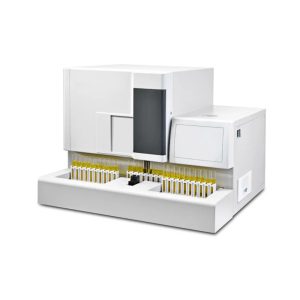
A practical planning example is a hospital laboratory that receives around 180 urine samples during the morning collection period. With a basic strip reader, staff may need to dip strips, enter patient information, arrange the testing sequence, and transfer results manually. With the UA-752, samples can be organized in racks, identified by barcode, and processed in batches while urgent samples enter through the STAT workflow. Actual completion time will still depend on controls, repeat tests, sample condition, and the laboratory’s operating procedure.
How Do Basic, Semi-Automatic, and Automatic Systems Compare?
The following comparison focuses on workflow differences rather than unsupported headline numbers. Performance for basic and semi-automatic systems varies by model and operator.
| Feature | Basic Urine Strip Reader | Semi-Automatic Urine Chemistry Analyzer | UA-752 Automatic Urine Analyzer |
| Sample handling | Mainly manual | Partially automated | Automated sample handling |
| Strip dipping and loading | Usually performed by the operator | Operator involvement is normally required | Automatic strip handling |
| Sample identification | Often entered manually | Manual or optional barcode, depending on model | Built-in barcode reading |
| Sample loading capacity | One or a small number of samples at a time | Depends on the analyzer | Up to 60 samples |
| Rated throughput | Strongly affected by operator workflow | Varies by model | Up to 240 tests per hour |
| STAT sample access | Usually requires manual reprioritization | Depends on the system | Supported |
| LIS/HIS connection | Often unavailable or manual | Optional on some systems | Unidirectional or bidirectional connection |
| Best suited for | Low-volume clinics | Low- to medium-volume laboratories | Medium- and high-volume urine chemistry workflows |
The correct choice depends on how many samples arrive together and how much manual work the laboratory wants to remove. A small clinic may not need a high-capacity automatic analyzer, while a hospital laboratory can lose substantial staff time if it relies on a system designed for occasional testing.
Sample Volume and Installation
The UA-752 uses native samples and requires a minimum sample volume of 2.0 mL. Check this requirement against your collection tubes and standard operating procedure. Low-volume samples or repeat testing may need closer planning.
The main unit measures 680 × 650 × 545 mm and weighs 53 kg. It uses a 100–240 V, 50/60 Hz power supply. These details affect bench planning, delivery access, electrical preparation, and installation.
Which Features Have the Biggest Effect on Daily Work?
Once throughput fits your workload, look at the features that change how staff handle samples. Many buying mistakes happen because a team pays for functions that sound impressive but overlooks basic workflow tools.
Barcode Reading and STAT Access
A built-in barcode reader helps connect each tube to the correct test record. It reduces manual data entry and makes result tracing easier.
STAT access is equally practical. Urgent samples can enter the workflow without requiring staff to stop and rebuild the entire routine batch.
The UA-752 includes both functions. For a hospital laboratory, these workflow features are often more valuable than a small increase in headline throughput.
Measurement and Quality-Control Functions
The analyzer uses colorimetry for urine chemistry measurement. It checks color and turbidity with an RGB sensor, specific gravity with a refractometer, and conductivity through an electrode method.
Its test options cover 11, 12, or 14 parameters. Depending on the selected strip, these may include:
- Bilirubin
- Urobilinogen
- Ketones
- Ascorbic acid
- Glucose
- Protein
- Blood
- pH
- Nitrite
- Leukocytes
- Specific gravity
- Microalbumin
- Creatinine
- Calcium
Automatic quality-control analysis and self-check functions help staff monitor system status and routine consistency. The analyzer supports laboratory testing, while clinical interpretation remains the responsibility of qualified professionals.
Data Storage and LIS/HIS Connection
Manual result entry is slow and can create transcription errors. The UA-752 provides USB, RS232, and LAN interfaces, together with unidirectional or bidirectional LIS/HIS connectivity.
It stores at least 1,000,000 results, which suits laboratories with high testing volume or longer data-retention requirements.
The automated workflow and traceable test images also provide a clearer record when staff review a result, investigate an unusual run, or check the history of a sample.
What Does a Urinalysis Analyzer Really Cost?
The purchase price is only the first part of the cost. Two quotations can appear similar while covering different configurations, services, consumables, and operating expenses.
When comparing urine analyzer prices, evaluate what it costs to produce a valid reportable result rather than looking only at the initial equipment price.
Equipment and Setup Cost
Ask what the quotation includes:
- Main analyzer
- Sample racks
- Standard accessories
- External printer options
- Software
- Communication interfaces
- Shipping
- Installation guidance
- Operator training
Check whether local taxes, customs charges, and inland delivery are included.
Because the UA-752 is quoted according to the order and configuration, prepare your destination country, voltage, order quantity, test-strip choice, and LIS/HIS requirements before asking for a price.
This also makes it easier to compare the UA-752 with other urine testing equipment on the same basis.
Consumables and Labor Cost
Calculate test-strip use, control materials, cleaning items, storage losses, expired inventory, and waste handling. A lower strip price may not save money if packages expire before use or if the supply is unreliable.
Labor also belongs in the calculation. Barcode reading, 60-sample loading, 200-strip capacity, STAT access, and automatic result transfer may reduce repeated staff work.
The actual saving will vary by laboratory, but labor time should still be included when evaluating the total cost.
Cost per Reportable Result
A practical comparison is:
Annual equipment and operating cost ÷ valid reportable results
Include expected downtime, service, maintenance, repeat rates, consumables, and operator time.
A low-priced urinalysis machine that cannot handle your peak load may cost more per reportable result because staff spend additional time clearing queues, correcting data-entry problems, or repeating manual work.
Why Is the UA-752 a Strong Fit for Growing Laboratories?
The UA-752 provides automated urine chemistry testing without requiring a fully integrated urine sediment microscopy workflow.
This makes it suitable for:
- General hospitals
- Independent clinical laboratories
- Health-check centers
- Regional diagnostic facilities
- Laboratories moving up from semi-automatic strip analysis
For example, a health-check center may receive most samples within a limited morning collection period. In that setting, the ability to load up to 60 samples, hold 200 strips, read barcodes, and transfer results automatically may be more important than average daily volume alone.
The UA-752 may be more than a small clinic needs. It may also be the wrong choice if your project requires automatic urine sediment microscopy within the same system.
The right equipment is the one that fits your sample load, workflow, test menu, and information-system requirements, not the machine with the longest specification sheet.
Why Choose ARI for a Urinalysis Analyzer Project?
Supplier capability matters when the project includes overseas delivery, technical documents, installation guidance, staff training, or distributor support.
ARI combines medical equipment research, manufacturing, procurement quality control, final inspection, sales, and project support. The company has more than two decades of experience and operates three production facilities in Anhui, Jiangsu, and Guangdong, covering more than 50,000 square meters.
Its factories follow ISO 9001 and ISO 13485 quality systems. Quality control covers R&D design, incoming materials, manufacturing, and final inspection. ARI states that its equipment undergoes 72-hour environmental chamber testing under high-temperature, low-temperature, and humidity conditions.
ARI equipment is used in more than 500 hospitals, clinics, and healthcare facilities in China and has been exported to more than 100 countries. Project support can include installation guidance, equipment operation training, routine maintenance training, and distributor support.
These capabilities do not replace evaluation of the analyzer itself. They help buyers assess whether the supplier can support documentation, delivery, training, and longer-term project requirements.
What Should You Confirm Before Ordering?
Before placing an order, send ARI a workflow brief covering:
- Daily sample volume
- Peak-hour sample volume
- Required test parameters
- Tube type
- Test-strip choice
- Barcode format
- LIS/HIS environment
- Local voltage
- Destination country
- Required installation date
Before final approval, request the applicable product certificates and quality documents. ARI’s medical equipment portfolio includes CE- and FDA-related accreditations, while its factories follow ISO 9001 and ISO 13485.
For tender or distributor projects, confirm which certificates and registration documents apply to the exact model and destination market. Do not assume that a certificate covering one product automatically applies to every configuration or country.
Ask for a written quotation that separately lists:
- Analyzer
- Standard accessories
- Optional accessories
- Test strips
- Freight
- Installation requirements
- Training
- Warranty
- Service terms
Separating these items makes quotations easier to compare and helps you calculate the real project cost.
Tell ARI your daily and peak sample volume, required parameters, destination country, voltage, barcode format, and LIS/HIS requirements. You can then contact ARI to have the project team review your workflow, recommend a suitable configuration, and prepare a customized quotation covering the analyzer, accessories, consumables, delivery, training, and service requirements.
FAQ
Q1: How Many Tests per Hour Should a Urinalysis Analyzer Handle?
A1: Choose a capacity that covers peak-hour samples, controls, repeat tests, and urgent requests, with additional room for future growth. Do not select a system based only on average daily volume.
Q2: Is the UA-752 Automatic Urine Analyzer Suitable for High-Volume Laboratories?
A2: It is suitable for many medium- and high-volume urine chemistry workflows because it processes up to 240 tests per hour, loads up to 60 samples, and holds up to 200 strips.
Q3: Which Parameters Can the UA-752 Measure?
A3: Its 11, 12, or 14-parameter options can cover common urine chemistry items. The system also measures color, turbidity, specific gravity, and conductivity using different measurement methods.
Q4: Does the UA-752 Connect to LIS or HIS?
A4: Yes. It supports unidirectional or bidirectional LIS/HIS connectivity through available USB, RS232, and LAN interfaces.
Q5: Is the UA-752 a Urine Sediment Analyzer?
A5: No. The UA-752 is designed for automated urine chemistry testing. A laboratory that requires fully automated urine sediment microscopy should confirm whether a separate sediment analyzer or an integrated urine analysis system is needed.
Q6: What Information Should You Send When Requesting a Quotation?
A6: Send your daily and peak sample volume, required parameters, strip choice, tube type, barcode format, LIS/HIS requirements, voltage, order quantity, destination, installation schedule, and service requirements.